Vector network analyzers (VNAs) are test instruments that measure electrical network parameters. They are essential for radio frequency (RF) and microwave component analysis of a wide variety of passive and active devices including filters, antennas and power amplifiers.
Network analyzers are ideal for transmission, reflection and impedance measurements as well as s-parameter measurements during design and production.
Network analyzers can be used to characterize radio frequency (RF) devices. Although initially only measuring S-parameters, network analyzers are now highly integrated and advanced in order to outperform the device under test.
Let's take a look at the basics of network analysis and then see what other advanced measurements a network analyzer can perform.
What is a network analyzer?
Network analyzers can be used to characterize radio frequency (RF) devices. Although initially only measuring S-parameters, in order to outperform the device under test, today'snetwork analyzerAlready highly integrated and very advanced.
RF circuits require unique test methods. Voltages and currents are difficult to measure directly at high frequencies, so when measuring high-frequency devices, they must be characterized by how they respond to RF signals. Network analyzers characterize devices by sending known signals to the device and then making constant ratio measurements of the input and output signals.
Early network analyzers only measured amplitude. These scalar network analyzers could measure return loss, gain, VSWR, and perform a number of other amplitude-based measurements.
Most network analyzers today are vector network analyzers-measuring both amplitude and phase. Vector network analyzers are an extremely versatile class of instruments that can characterize S-parameters, match complex impedances, and make time-domain measurements.
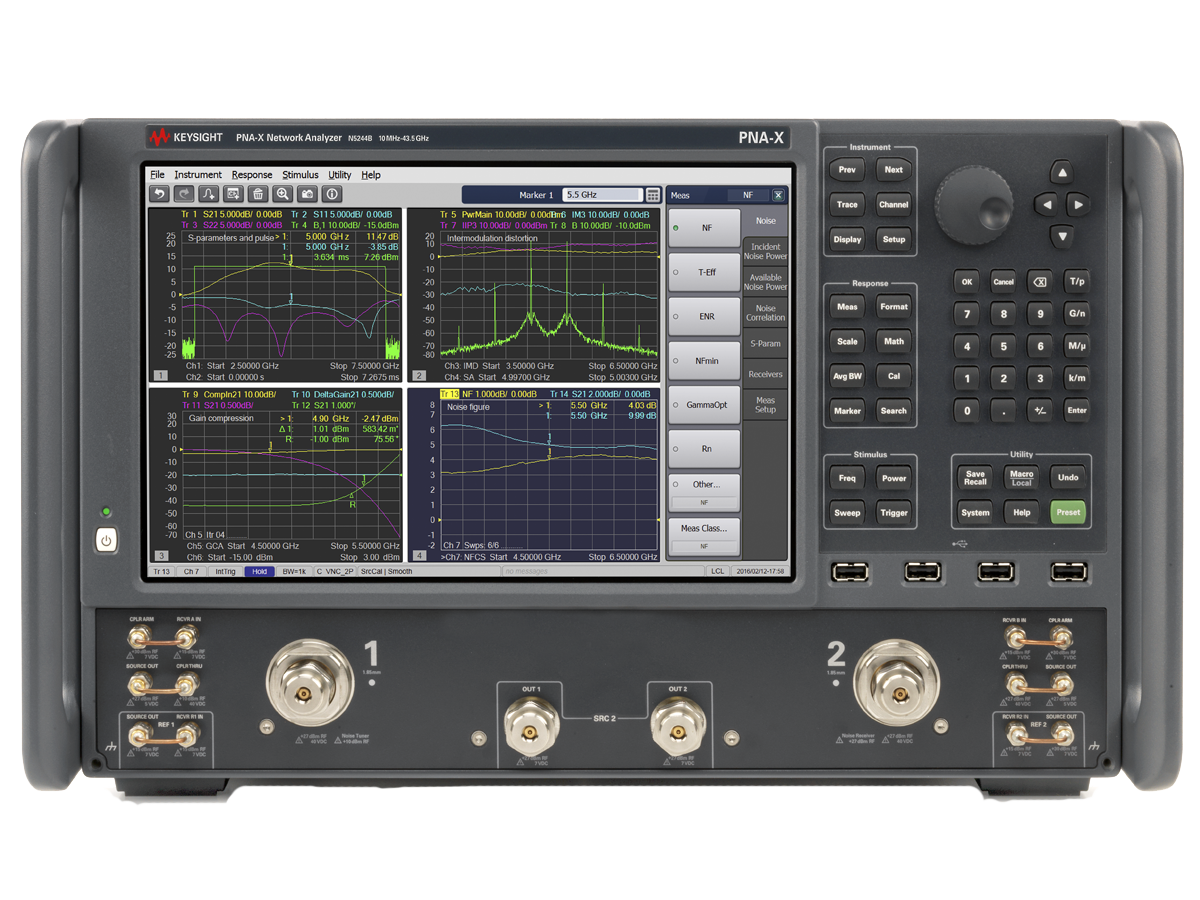
For example, the PNA-X Vector Network Analyzer is a high-end network analyzer.
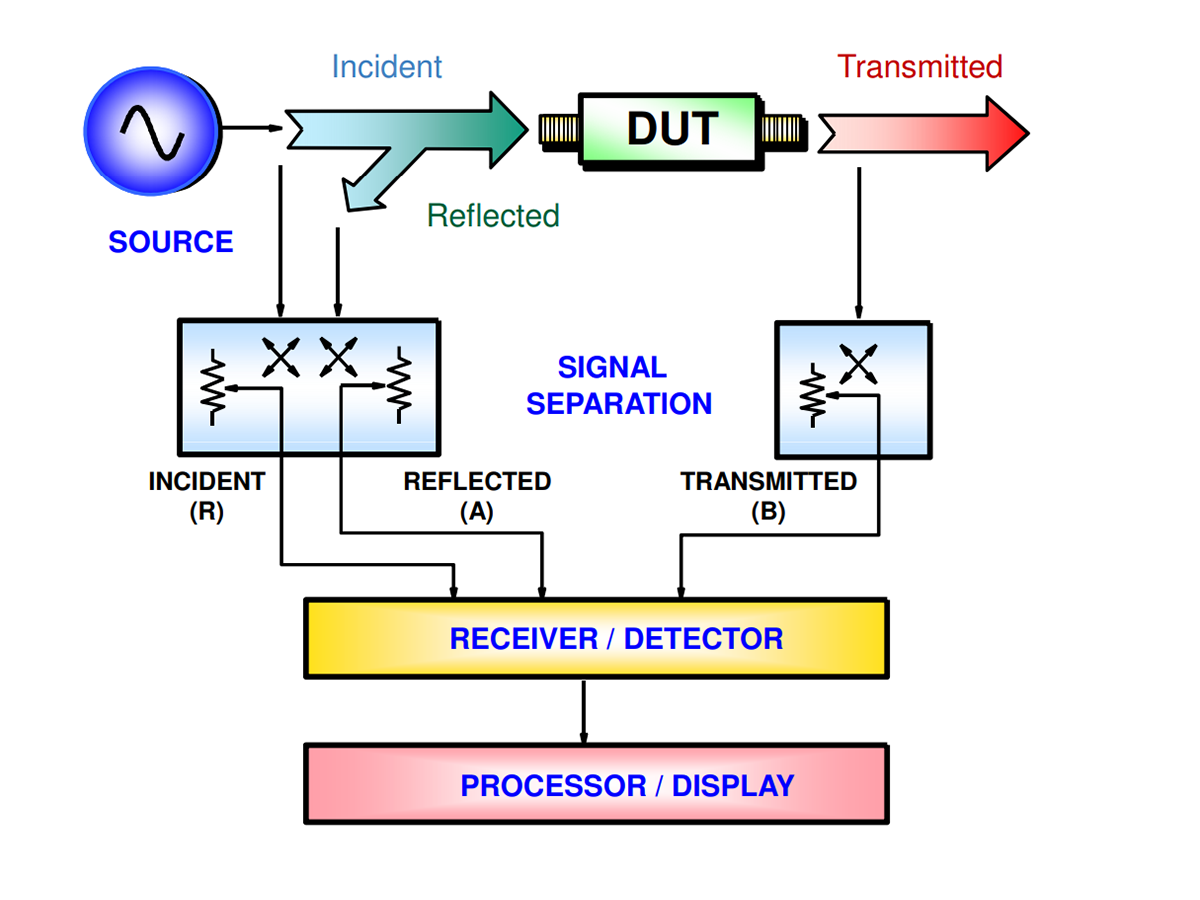
The high-level block diagram of this measurement example shows that there is a signal sent in the forward direction through the input of the device under test to the output. The measurement from the input to the output of the device is referred to as theForward measurementThe
The receiver side of the network analyzer measures the incident, reflected and transmitted signals in order to calculate the forward S-parameters.
Block Diagram of a General Purpose Network Analyzer
Key Specifications of Vector Network Analyzers
Vector network analyzers are both signal generators and receivers, so they have a large number of very necessary technical specifications. In this section, you will learn about some of the key technical specifications of network analyzers.
Maximum frequency
The maximum frequency of a VNA is the highest frequency it can measure. The receiver side of a network analyzer has an analog-to-digital converter (ADC) that converts the input signals into digital format. These signals can then be analyzed and displayed. However, the ADC does not have the ability to convert signals in the RF range, so the incident signal must be downconverted to its operating frequency. This operating frequency is called the intermediate frequency (IF).
dynamic range
Dynamic range is the range of power over which the response of a component can be measured.
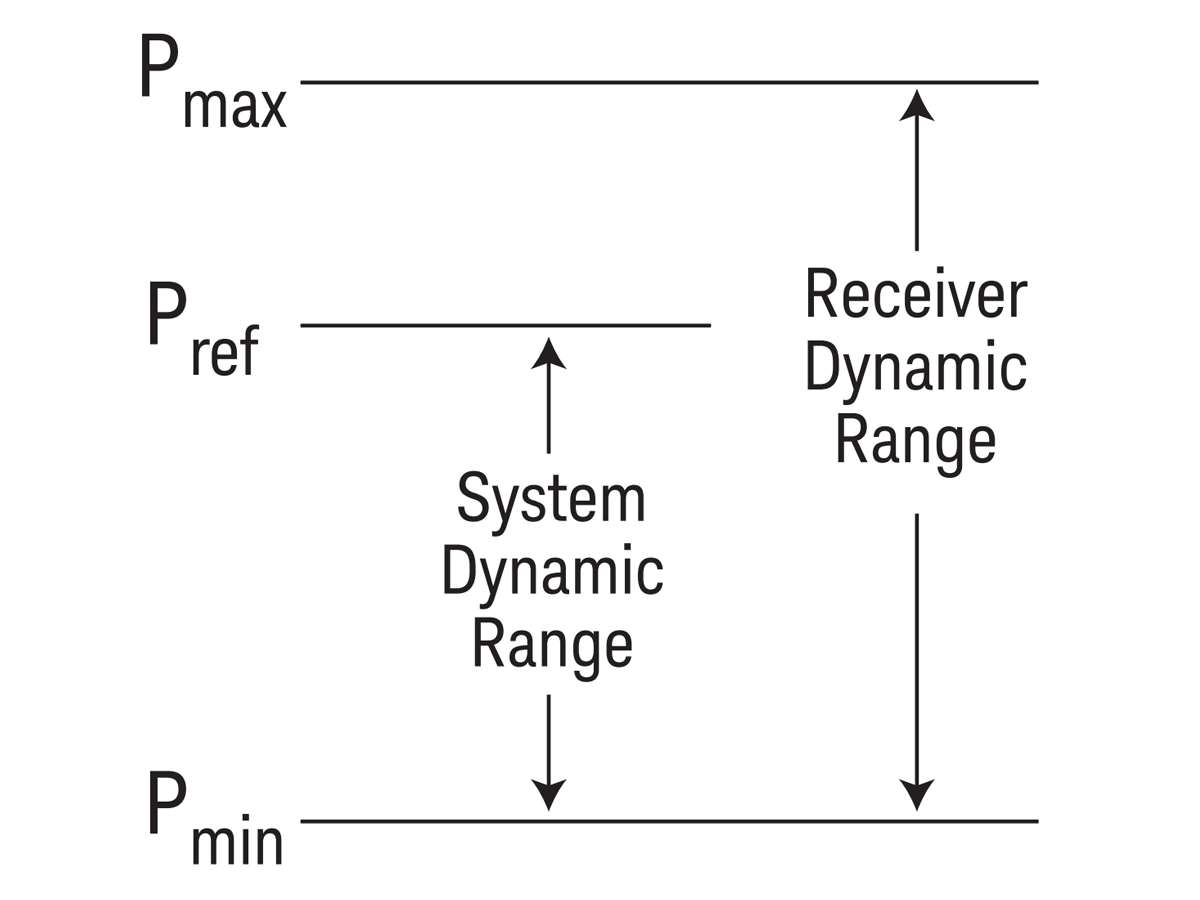
This figure shows two different ways of defining dynamic range. The system dynamic range is the value used for instrument specifications.
The system dynamic range is the function of the instrument when no boost amplifier is used and the gain of the device under test is not taken into account. The maximum source power of an instrument is its maximum power level, Pref
The receiver dynamic range is the dynamic range of the instrument when power amplification is used. Unlike using the source power as the maximum power level, this specification is based on the maximum power Pmax that can be measured at the receiving end of the instrument.
Defining the dynamic range
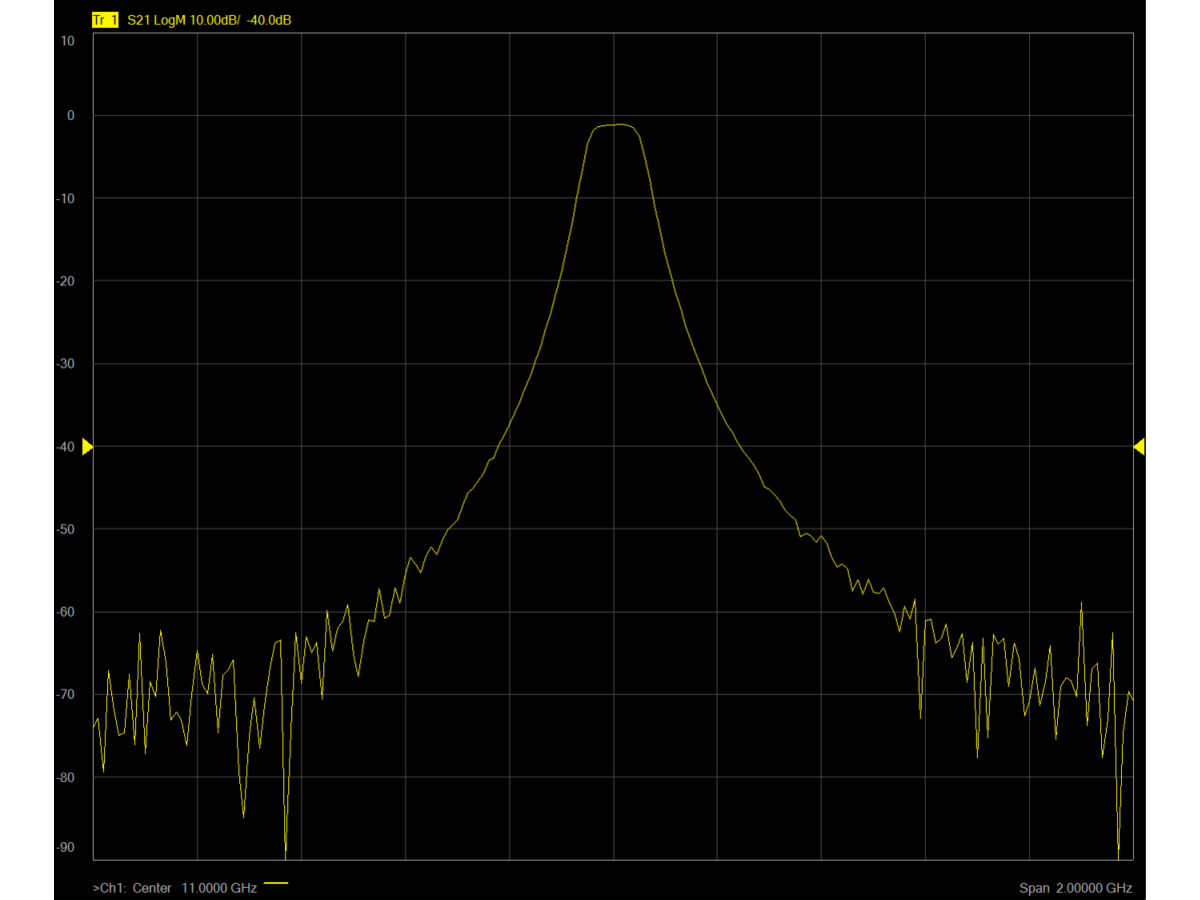
A trace measured by the bandpass filter S21, which shows the dynamic range of the instrument, is shown in the lower left-hand plot. The upper limit of the trace is relatively flat and the lower limit contains some noise. Let's look at what factors determine the shape of these boundaries.
The maximum power level of the dynamic range is determined by the upper limit of the source power level and the compression point of the receiver.
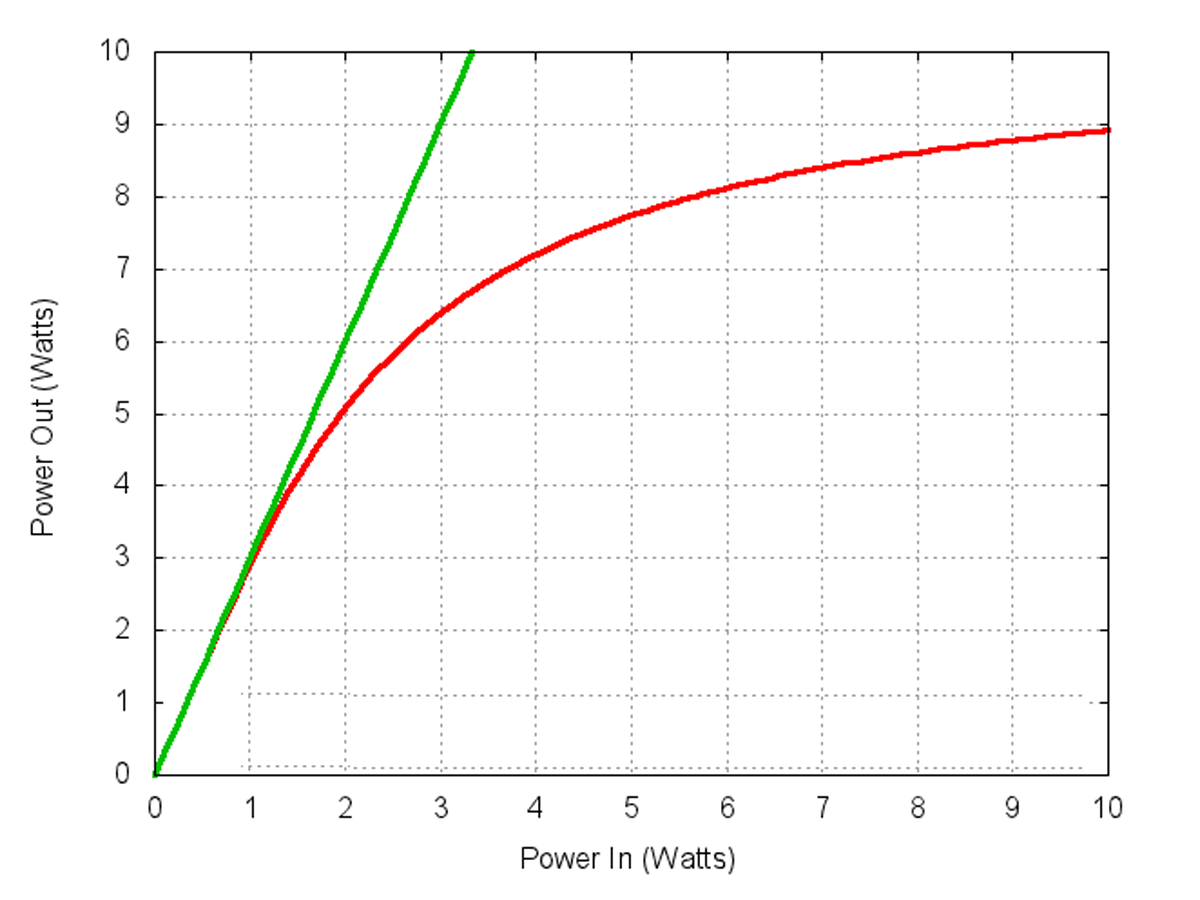
The mixers and amplifiers that make up a receiver can only handle so much power before they reach saturation, or before they reach maximum output. When a device is in the saturation region, there is no longer a linear relationship between its input and output.
The saturation of the amplifier can be seen in the right-hand diagram below. At input powers higher than 1W, the actual output (red) will deviate from the desired output (green). This phenomenon is called compression. The receiver cannot capture the signal from any device output above its compression point. This limitation of the input power constitutes the upper limit of the dynamic range.
Dynamic range of traces In the gain compression plot, the ideal linear transfer function of the amplifier is shown in green and the true transfer function is shown in red.
output power
Output power reflects how much power the VNA's signal generator and tester can transmit into the device under test. It is expressed in dBm and is referenced to 50Ω impedance to match the characteristic impedance of most RF transmission lines.
High output power is useful for improving the signal-to-noise ratio of a measurement or determining the compression limits of the device under test.
Many active devices, such as amplifiers, require extremely challenging linear and nonlinear high power measurements beyond the power limits of the network analyzer.
trace noise
Trace noise is the superimposed noise you see forming on the response of the device under test due to random noise in the system. It can make the signal look less smooth and even a little jittery.
Trace noise can be eliminated by increasing the test power, decreasing the bandwidth of the receiver, or averaging.
Signal analyzers are capable of measuring the amplitude and phase of an input signal at a single frequency. The Signal Analyzer combines the large dynamic range of a swept-tuned spectrum analyzer with the power of a Vector Signal Analyzer (VSA) to perform in-channel measurements, such as Error Vector Magnitude (EVM) measurements, which require both magnitude and phase information. The VSAs are available in a wide range of sizes and sizes.
Want to know how to use the current probe? Please first understand the following basic usage of the current probe and precautions for use. Since electricity is invisible, it is not possible to immediately determine whether a malfunction has occurred. In some cases, current measurements are required on a daily basis to prevent malfunctions, as well as to identify the cause of malfunctions when they do occur. Digital multimeters, clamp meters, and current probes can be used...
Digital multimeters are used, and this article will detail their advantages and disadvantages. ■ SUMMARY Electronic devices are powered by electricity. However, because electricity is invisible, it is necessary to use measuring instruments such as digital multimeters to check their safety and quality and to find out why malfunctions occur. Digital multimeters have so many buttons and ports that many people find them difficult to manipulate at first...
PathWave BenchVue software for waveform generators provides full-featured waveform creation software. This software enables engineers to take full advantage of signal generation capabilities to create custom waveforms quickly and easily. PathWave BenchVue Software is a PC application that provides easy-to-use creation tools such as a formula editor and waveform calculator and plotter...
 Comprehensive test and measurement service provider-Shenzhen Weike Electronic Technology Co.


Hello!sign in