 Comprehensive test and measurement service provider-Shenzhen Weike Electronic Technology Co.
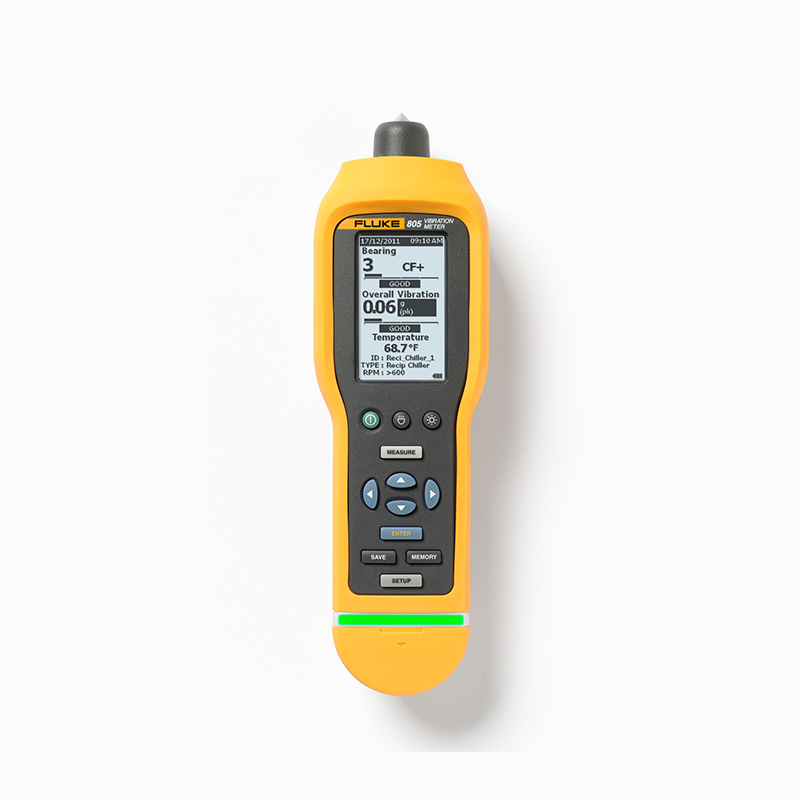
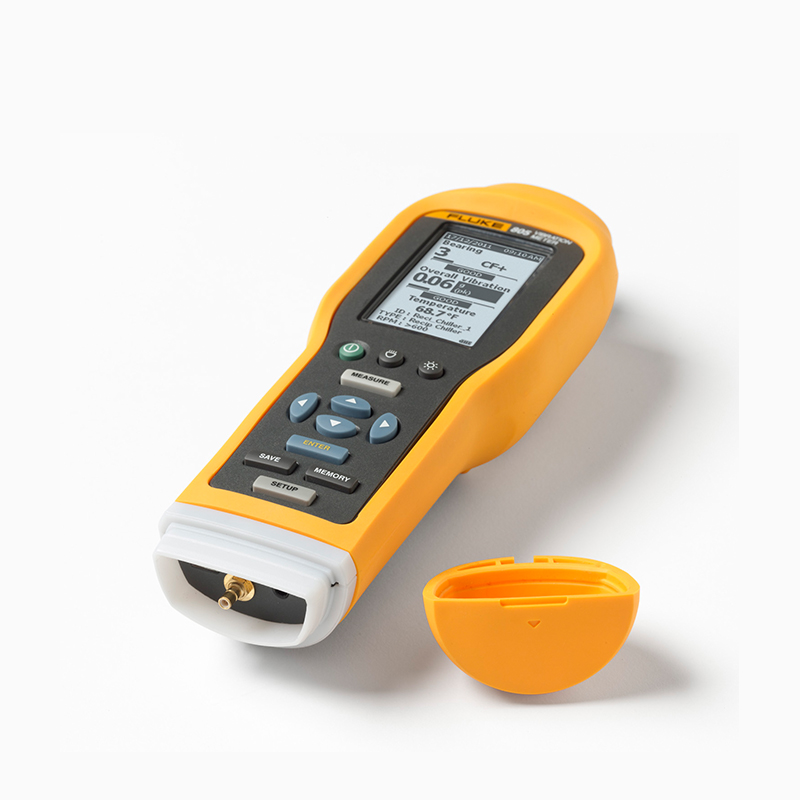
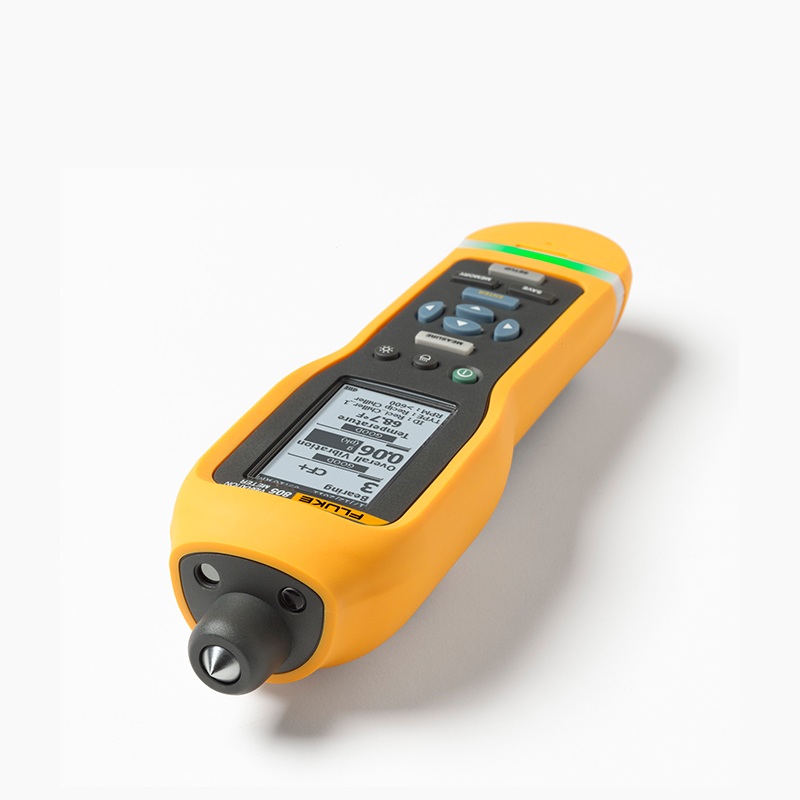
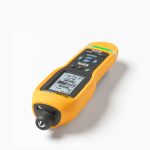
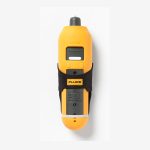
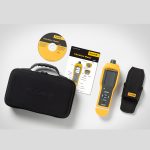


Product Overview: Fluke 805 Vibration Spotter
A reliable, repeatable and accurate method for detecting bearing vibration and through-frequency vibration conditions.
Develop maintenance programs with confidence. The Fluke 805 is a reliable vibration spotting device for front-line mechanical troubleshooting teams that need to get repeatable severity level readings of through-frequency vibration and bearing conditions.
The 805 can be used to check the following types of machines:
- Freezers (refrigeration)
- fan (loanword)
- Cooling tower drive equipment
- centrifugal pumps
- Positive Displacement Pumps
- air compressor
- air blower
- General-purpose gearboxes (roller bearings)
- Machine tools (motors, gearboxes, axles, etc.)
What is peak factor+?
Peak Factor+ is a new proprietary algorithm (or technique) that takes the confusion out of bearing measurements. Vibration analysts use the raw Peak Factor to identify bearing faults. It is defined as the ratio of the peak value of a time-domain vibration signal to its root-mean-square value.
A major limitation of the original Peak Factor algorithm is that it does not increase linearly as the bearing is lowered, which makes it difficult to determine the severity of mechanical problems. In fact, the peak factor decreases as the bearing slowly fails severely (due to larger rms values).
To overcome this limitation, Fluke uses a proprietary algorithm called Peak Factor Upgrade (CF+) The CF+ value ranges from 1 to 16 and increases as the bearing condition deteriorates, ensuring that the user can easily recognize the severity of the problem. For added simplicity, Fluke also uses a four-level severity scale that defines bearing conditions as good, fair, unsatisfactory, or unacceptable.
Using the 805 to export measurements and create trend reports
Trend reports or vibration measurements saved in a spreadsheet that have been measured repeatedly over a period of time are a good way to keep track of your machine's performance. With the 805, you can do this easily:
- Export of measurement results to Excel via USB connection
- Create reading trend reports with pre-built Microsoft® Excel templates and graphs
- Comparison of through-frequency vibration readings to ISO standards (10816-1, 10816-3, 10816-7)
What makes the Fluke 805 the better choice?
- It is a vibration spot checker - not a vibrometer pen - used to measure through-frequency vibration as well as specific variables such as bearing condition and temperature to provide a more complete picture.
- The combined vibration and force sensor end compensates for user variance (force or angle) to produce accurate and repeatable readings.
- Four severity levels and an on-board processor allow calculations of bearing condition and through-frequency vibration with easy-to-understand text alerts (good, fair, unsatisfactory or unacceptable).
- The sensors are sensitive enough to read a wide range of frequencies (from 10 to 1000 Hz and 4000 to 20000 Hz), covering most machine and part types.
- Straightforward user interface minimizes the number of times the user has to enter RPM ranges and device types.
Product Specification: Fluke 805 Vibration Spotter
| Vibration Meter | ||
| Low frequency range (passband measurement) | 10 Hz to 1000 Hz | |
| High frequency range (CF+ measurement) | 4000 Hz to 20000 Hz | |
| severity rating | Good, fair, unsatisfactory, unacceptable | |
| vibration limit | 50 g peak (100 g maximum peak) | |
| A/D converters | 16 bits | |
| signal-to-noise ratio | 80 dB | |
| sampling rate | low frequency | 20000 Hz |
| high frequency | 80000 Hz | |
| Real Time Clock Backup | button cell | |
| transducers | ||
| (level of) sensitivity | 100 mV g ±10% | |
| Measured value range | 0.01 g to 50 g | |
| Low frequency range (passband measurement) | 10 Hz to 1000 Hz | |
| High Frequency Range | 4000 Hz to 20000 Hz | |
| resolution (of a photo) | 0.01 g | |
| accurate | Within 100 Hz ± measured value 5% | |
| unit of amplitude | ||
| accelerations | g, m/sec² | |
| tempo | in/s, mm/s | |
| displacement (vector) | mils, mm | |
| Infrared thermometer (temperature measurement) | ||
| range (of scales or measuring equipment) | -20 °C to 200 °C (-4 °F to 392 °F) | |
| accurate | ±2 °C (4 °F) | |
| monitoring range | Fixed, approximately ~3.8 cm (1.5 in) | |
| External Sensors | ||
| Fluke supports but does not provide external sensors | ||
| frequency range | 10 Hz to 1000 Hz | |
| Bias voltage (to power supply) | 20 VDC to 22 VDC | |
| Bias current (to power supply) | Maximum 5 mA | |
| internal software | ||
| external interface | USB 2.0 (full speed) communication interface | |
| data capacity | In the database on the built-in flash memory | |
| escalate (in intensity) | via USB jack | |
| memory (unit) | Store up to 3500 measurements | |
| radiate | ||
| Electrostatic discharge: burst | Standard EN 61000-4-2 | |
| electromagnetic interference | Standard EN 61000-4-3 | |
| radiate | Standard CISPR 11 Level A | |
| operating environment | ||
| operating temperature | -20 °C to 50 °C (-4 °F to 122 °F) | |
| storage temperature | -30 °C to 80 °C (-22 °F to 176 °F) | |
| Operating humidity | 10% to 95% Relative Humidity (non-condensing) | |
| Operating/storage height | 3048 m (10000 ft) Elevation above sea level | |
| IP Protection Rating | IP54 | |
| vibration limit | 500 g peak | |
| Drop test | 1 meter | |
| General technical indicators | ||
| Battery Type | AA (2 cells) lithium iron disulfide batteries | |
| Battery life | 250 measurements | |
| Dimensions (L x W x H) | 24.1 x 7.1 x 5.8 cm (9.5 x 2.8 x 2.3 in) | |
| weights | 0.40 kg (0.89 lb) | |
| jacks | USB mini-B 7-pin, stereo audio output jack (3.5 mm audio plug), external sensor jack (SMB connector) | |
Model: Fluke 805 Vibration Spotter
Fluke 805
Vibration Intensity (Spot Check) Meter
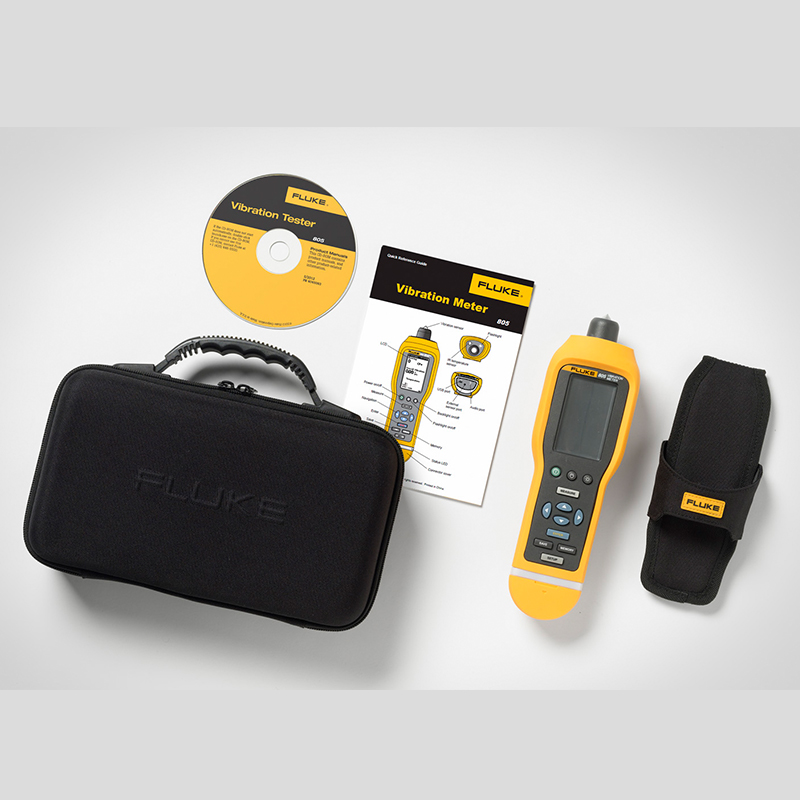
Accessories
- USB cable
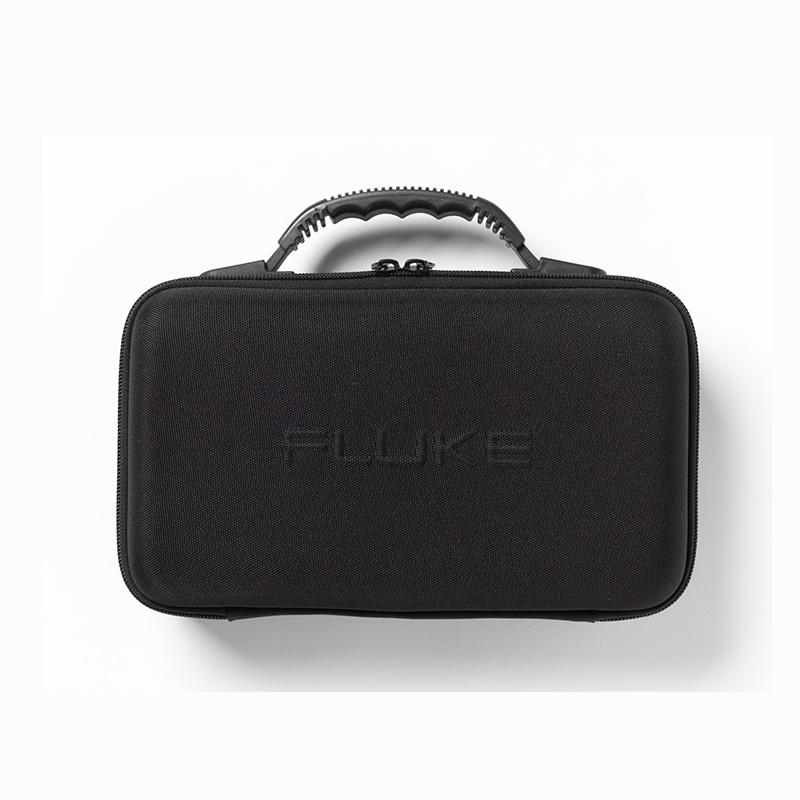
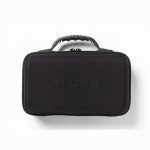
- organizer
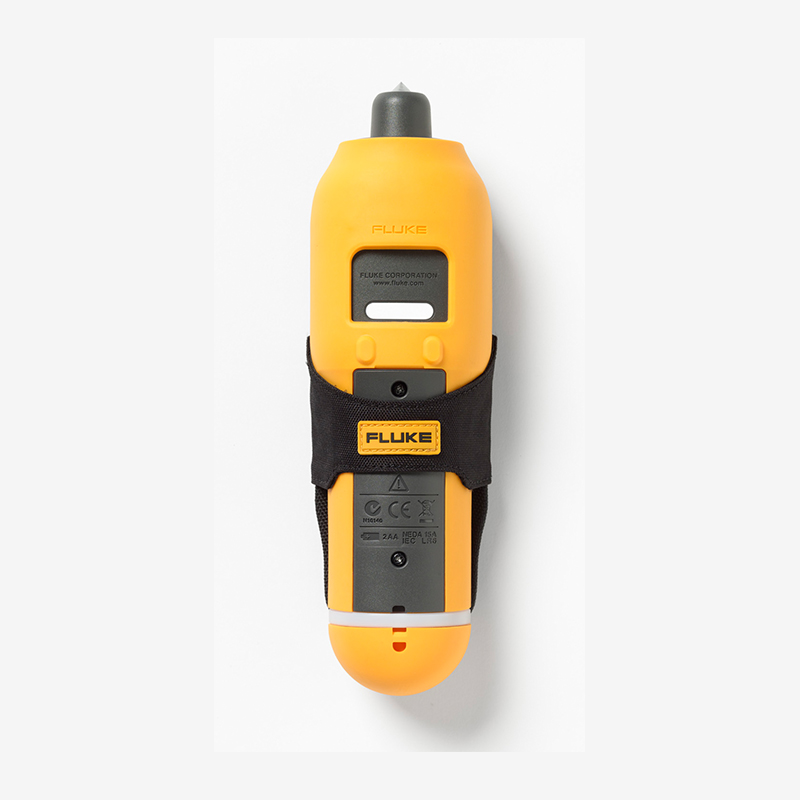
- Belt Holster
- Quick Reference Manual
- Two AA lithium batteries